


Key AGV Vehicle Types: Match Load Capacity, Facility Layout & Workflow to Cut Operational Delays
Choosing the right AGV type cuts material handling costs by 25-40% and reduces error rates by 18-22% for high-volume manufacturing and warehouse operations—no generic solutions work for every use case. Each AGV variant is engineered for specific load sizes, navigation environments, and workflow demands, so aligning selection to operational needs is non-negotiable for ROI. Below are the most common AGV types, tailored to distinct industry and facility scenarios.
What AGV Handles Palletized Loads in Narrow Aisles?
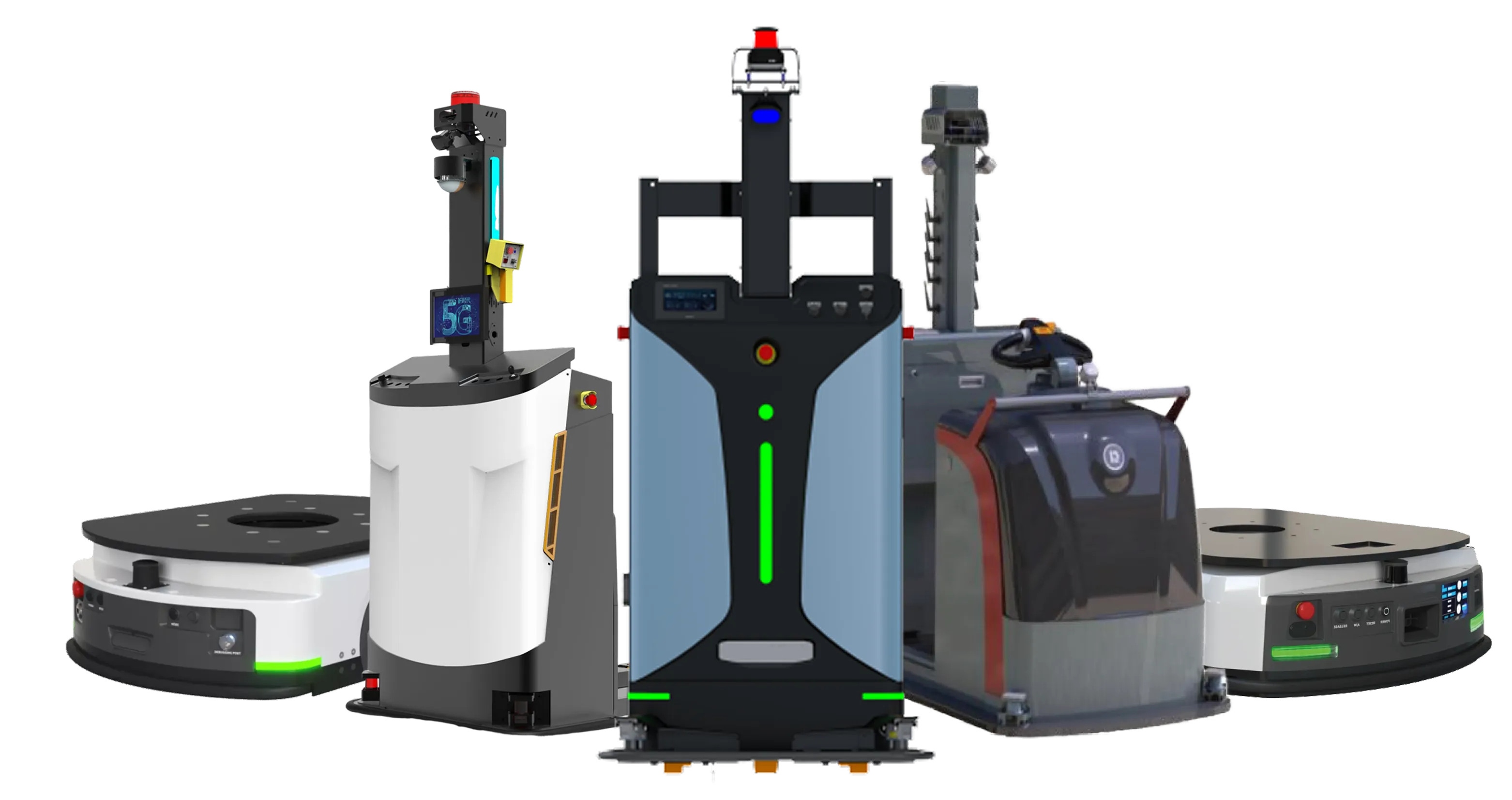
Very Narrow Aisle (VNA) AGVs are designed for facilities where floor space is at a premium. These units lift loads up to 5 tons and operate in aisles as narrow as 1.8 meters—30% tighter than standard forklift requirements. Laser-guided VNA models use reflective tape to map paths, eliminating permanent floor markers. A 3-ton VNA AGV deployed in an Amazon small-parts fulfillment center reduced aisle space usage by 28% and increased order picking throughput by 15% in its first 6 months. This variant integrates with warehouse management systems (WMS) to sync real-time order data, avoiding manual routing errors.What AGV Moves Heavy Raw Materials in Auto or Steel Factories?
Heavy Load (HL) AGVs handle loads from 10 to 100 tons, making them ideal for steel coil transport, auto body assembly, and mining equipment production. Most HL AGVs use magnetic tape or laser SLAM for navigation, with large units featuring independent wheel steering to maneuver tight factory bays. A 20-ton HL AGV used in Ford’s Dearborn Truck Plant moved frame sections between welding stations, cutting per-move downtime from 12 minutes to 2 minutes and reducing labor needs for material transport by 2 full-time operators. These units also have reinforced chassis and fail-safe braking systems to comply with heavy-industry safety standards.What AGV Navigates Dynamic, Mixed-Load Environments?
SLAM-based unit load AGVs adapt to unmarked floors and dynamic obstacles like people and manual forklifts. These units carry 0.5 to 2 tons of mixed loads—pallets, crates, or individual containers—using natural feature matching to adjust paths in real time. A 1-ton SLAM AGV deployed in a Coca-Cola US distribution hub handled both full pallets of soda and empty plastic crates daily, avoiding layout reconfigurations that would have delayed operations. Unlike tape-guided models, SLAM AGVs require no floor modifications, reducing setup time by 50% compared to traditional AGV variants.What AGV Works in Ultra-Precision, Cleanroom Settings?
Mini AGVs for micro-loads serve semiconductor fabs, pharmaceutical labs, and medical device manufacturing, where precision and contamination control are critical. These units carry 50 to 500 kg of small components, with positioning accuracy of ±10 mm—far higher than standard AGVs. Many are certified to ISO 14644-1 Class 5 cleanroom standards, preventing particle contamination during transport. A 100kg mini AGV used in TSMC’s 5nm wafer fabrication facility moves wafers between process tools, eliminating manual handling errors that cause $10,000+ losses per contaminated lot.Selecting the wrong AGV type leads to underutilization and higher long-term costs, so prioritize alignment with your core operational constraints. For project-specific requirements, consult your AGV supplier directly.
What's the typical ROI timeline for a 2-ton SLAM AGV in a 3-shift warehouse?
18 to 24 months, based on an average annual labor cost reduction of $120,000 from replacing two manual material handlers, plus a 10% reduction in order picking errors.
Can a narrow aisle AGV operate alongside existing manual forklift traffic?
Yes, when equipped with 360-degree laser obstacle detection; 75% of VNA AGV deployments in mixed-traffic facilities maintain 90% or higher uptime, per 2024 industrial automation data.
What's the maximum off-the-shelf load capacity for an industrial AGV without custom builds?
50 tons; custom heavy-load AGVs (up to 100 tons) have an 8 to 12-week lead time, compared to 2 weeks for standard off-the-shelf units.




 Contact Us